
Why Are Argentine Ants So Common in San Ramon?
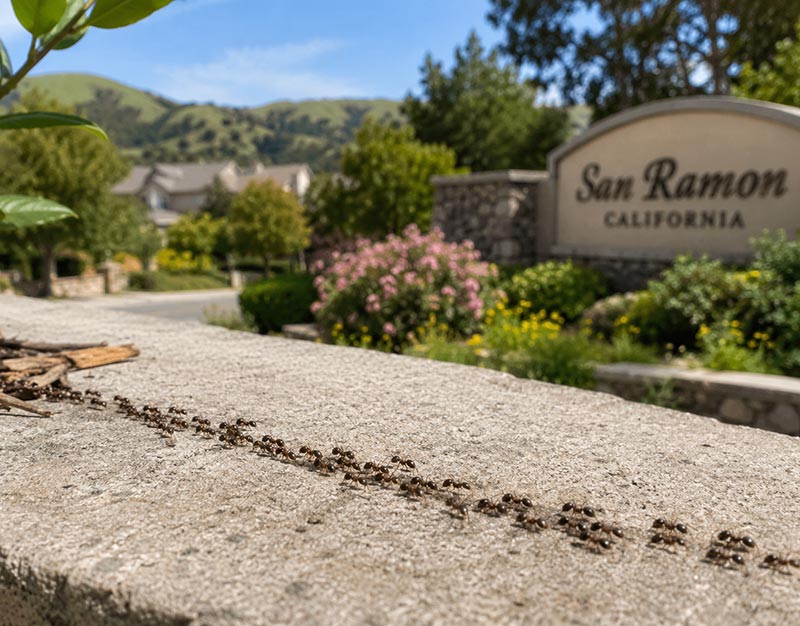
If you’ve found long trails of tiny brown ants winding across your kitchen counters, bathroom sinks, backyard patios, or even the side of your home, you’re likely dealing with Argentine ants. These persistent pests have become one of the most common ant species throughout San Ramon and the greater East Bay, frustrating homeowners who often discover that no matter how many ants they eliminate, the infestation keeps returning.
The reason isn’t simply that there are more Argentine ants than other species. Their unique colony structure, combined with San Ramon’s mild climate, irrigated landscapes, and suburban neighborhoods, creates the perfect environment for them to thrive. Understanding why they’re so successful is the first step toward keeping them under control.
In This Article You Will Learn:
- Why Are Argentine Ants So Common in San Ramon?
- How to Tell If the Ants Around Your Home Are Argentine Ants
- Why Argentine Ants Are So Successful
- Why San Ramon Is the Perfect Environment for Argentine Ants
- Can I Treat Argentine Ants Myself?
- How to Make Your Property Less Attractive to Argentine Ants
- When It’s Time to Call a Pest Professional
- Have Argentine Ants That Keep Coming Back?
- Frequently Asked Questions About Argentine Ants in San Ramon
How to Tell If the Ants Around Your Home Are Argentine Ants
Not every ant that enters your home is an Argentine ant, but they’re certainly the species most homeowners in San Ramon encounter. Correctly identifying the ants invading your property is important because different species require different treatment strategies, and what works for carpenter ants or pavement ants may have very little effect on Argentine ants.
.
Argentine Ant Appearance
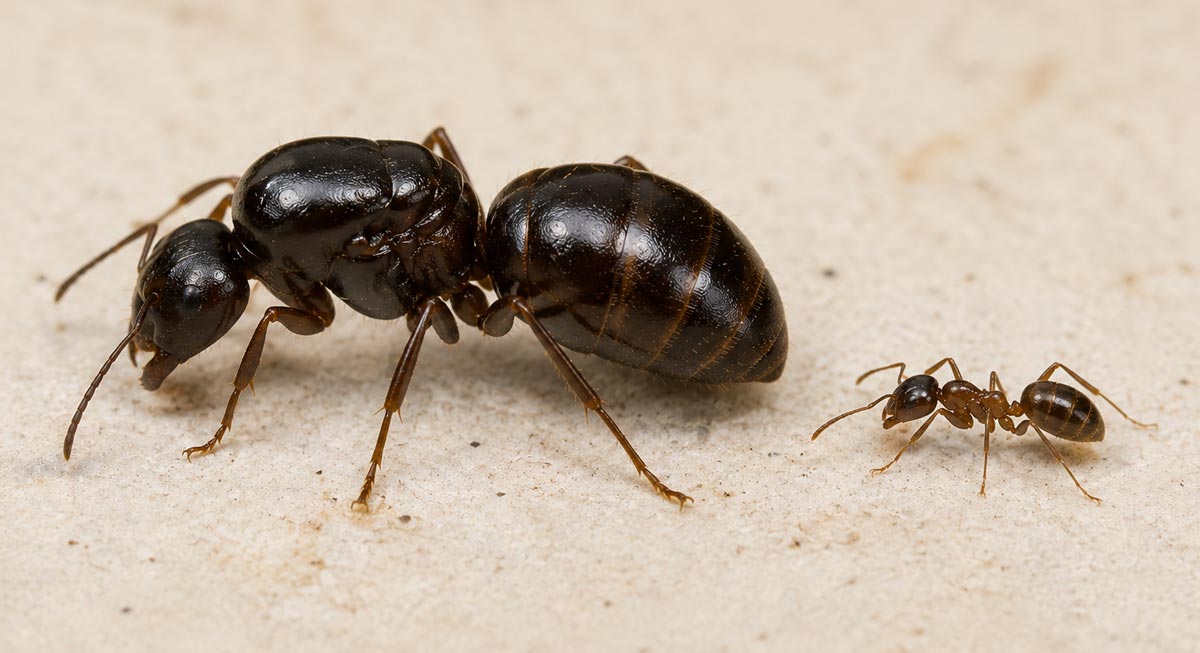
Argentine ants are relatively small, measuring about one-eighth of an inch long, with a light to dark brown body that appears fairly uniform in size. Unlike carpenter ants, which often have noticeably larger workers, Argentine ants tend to look nearly identical as they travel together.
.
Argentine Ant Behavior
Their behavior is often the easiest way to identify them. Rather than spotting a few isolated ants wandering across the floor, Argentine ants form long, organized trails that can stretch across sidewalks, fences, landscaping, foundations, and into your home. Once they discover a food or water source, hundreds or even thousands of workers may follow the same invisible scent trail.
.
Common Places Argentine Ants Are Found in San Ramon Homes
Homeowners also tend to notice Argentine ants around moisture. Kitchens, bathrooms, irrigation valves, outdoor faucets, pool equipment, and even condensation around air conditioning units can all become gathering points. Because San Ramon experiences relatively mild winters, these ants remain active for much of the year, making infestations possible during every season rather than only in the warmer months.
Why Argentine Ants Are So Successful
Argentine ants have earned a reputation as one of California’s most persistent household pests because they behave very differently from most other ant species. Their social structure allows colonies to expand quickly, recover from setbacks, and occupy large areas that would normally be controlled by competing ant colonies. While most homeowners only notice the workers entering their home, those visible ants represent only a tiny fraction of a much larger network hidden beneath the soil, landscaping, and nearby structures.
Multiple Queens Make Colonies Extremely Resilient
Many ant species depend on a single queen to produce the colony’s offspring. If that queen dies, the colony eventually collapses. Argentine ants don’t operate that way. Instead, a single colony may contain dozens or even hundreds of queens. This means losing one queen has little impact on the colony’s ability to survive and reproduce. As long as other queens remain healthy, new workers continue to hatch, allowing the colony to recover quickly from disturbances that would eliminate many other ant species.
Neighboring Colonies Cooperate Instead of Competing
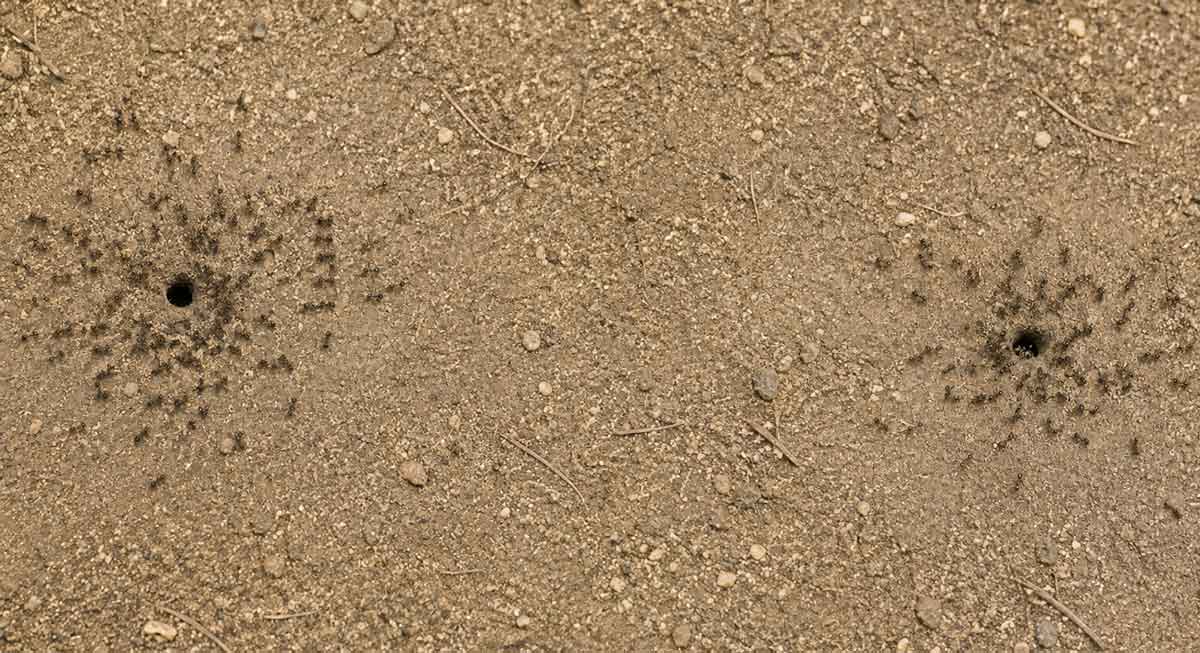
Most ant species are highly territorial and aggressively defend their nests against neighboring colonies. Argentine ants are unusual because nearby colonies often recognize one another as part of the same larger community. Rather than fighting over territory, they share workers, food resources, and nesting areas. Scientists often refer to these massive interconnected populations as supercolonies because they function as one enormous colony instead of many separate ones. This cooperative behavior allows Argentine ants to dominate entire neighborhoods and displace many native ant species.
New Colonies Can Form Without Flying Swarms
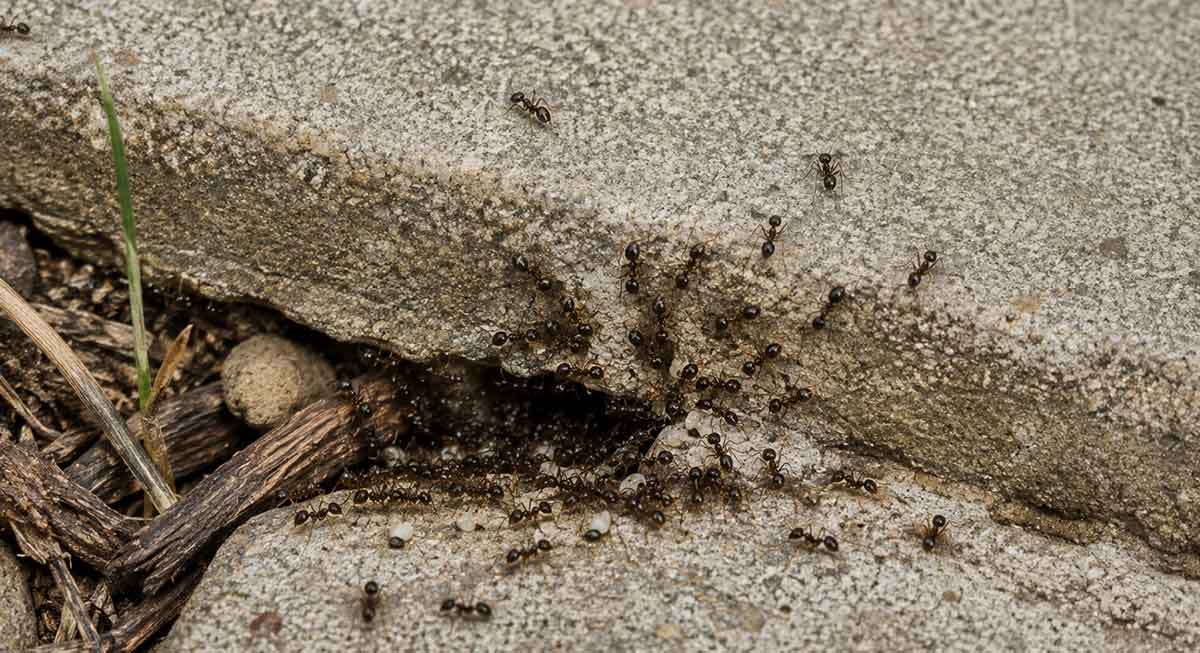
Many homeowners expect to see flying ants when a colony reproduces, but Argentine ants frequently spread through a process known as budding. Instead of sending winged reproductives long distances, one or more queens simply leave with a group of workers and establish a new nest nearby. Over time, these satellite colonies continue expanding through yards, landscaped areas, retaining walls, irrigation systems, and neighboring properties. What begins as a small infestation around one home can eventually become part of a much larger interconnected colony extending throughout an entire subdivision.
They’re Constantly Looking for Food and Water
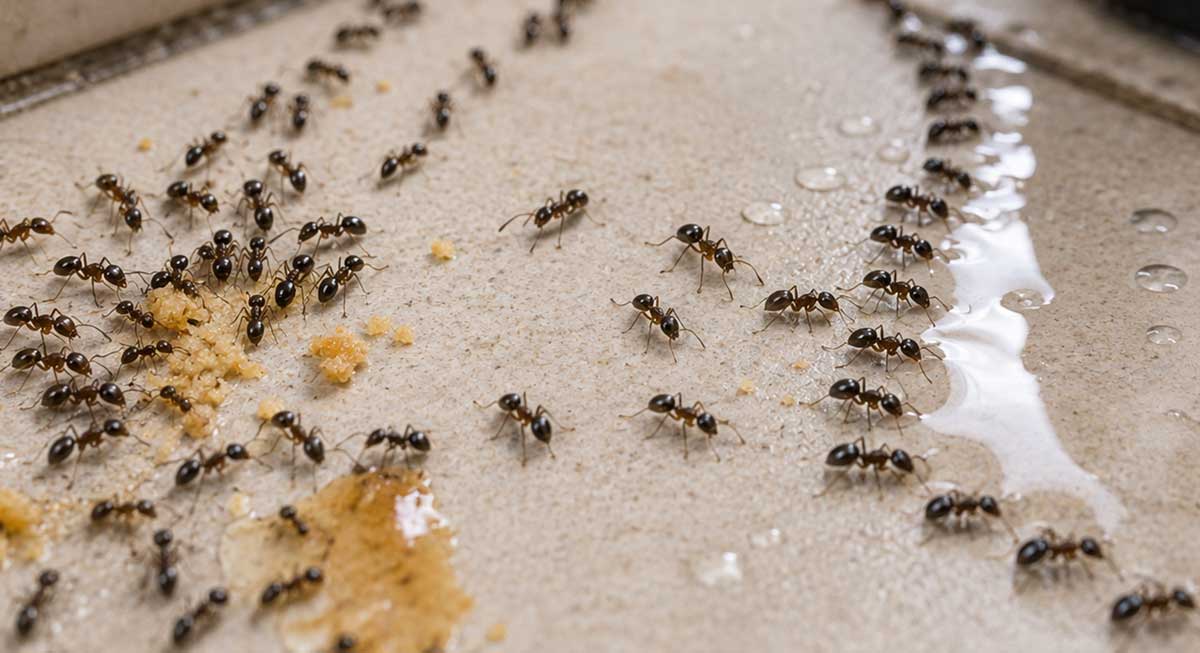
Argentine ants rarely remain in one place for long. Worker ants spend their days searching for reliable food and moisture sources, communicating discoveries to the rest of the colony through chemical scent trails. Inside homes, they’re attracted to sugary foods, grease, crumbs, pet food, and water. Outdoors, they feed heavily on honeydew, a sweet substance produced by aphids and other plant-feeding insects. Because San Ramon’s neighborhoods contain mature landscaping, ornamental plants, fruit trees, and regularly irrigated lawns, food and water are rarely in short supply.
They Quickly Adapt to Changing Conditions
Heavy rain, prolonged heat, landscaping projects, or changes in soil moisture don’t necessarily eliminate Argentine ants, they simply encourage them to relocate. Colonies frequently move to more favorable conditions, which explains why homeowners often experience sudden infestations after storms, heat waves, or changes to their irrigation systems.
When these remarkable behaviors are combined, it’s easy to understand why Argentine ants have become one of the dominant household pests throughout the Bay Area. What appears to be a simple trail of ants across your countertop may actually be connected to multiple nests spread throughout your yard and neighboring properties.
Why San Ramon Is the Perfect Environment for Argentine Ants
Even the most adaptable ant species need the right environment to flourish, and San Ramon provides nearly everything Argentine ants need to establish large, long-lasting colonies.
.
Mediterranean Climate
The city’s Mediterranean climate allows colonies to remain active throughout much of the year. Winters are generally mild enough that colonies don’t experience the prolonged dormancy seen in colder regions, allowing queens to continue reproducing while workers remain active in search of food and water.
.
Residential Landscaping
Residential landscaping also plays a significant role. Drip irrigation systems, decorative mulch, dense ground cover, mature trees, retaining walls, and irrigated lawns create consistently moist environments where colonies can establish themselves beneath rocks, landscape timbers, and soil without being disturbed.
.
Connected Neighborhoods
As San Ramon has grown, neighborhoods have also become increasingly connected. Homes often share fences, greenbelts, sidewalks, and landscaped common areas, making it easy for interconnected colonies to expand from one property to another. Even if a homeowner successfully reduces activity on their own property, nearby colonies can quickly reestablish foraging trails if the underlying infestation remains nearby.
Can I Treat Argentine Ants Myself?
Many homeowners understandably begin with store-bought ant sprays or bait stations when they first notice ants inside their home. While these products may reduce the number of visible ants for a short period, they rarely eliminate a well-established Argentine ant infestation.
.
Biggest Challenges
One of the biggest challenges is that the ants homeowners see are only worker ants. Their primary responsibility is to gather food for the colony, not reproduce. Eliminating hundreds, or even thousands, of workers does little to affect the queens hidden safely beneath the soil or inside protected nesting areas. As long as those queens remain alive, new workers continue replacing the ones that were eliminated.
.
Multiple Nests
The colony’s interconnected structure makes treatment even more difficult. Because Argentine ants often occupy multiple nests spread across a property or neighborhood, eliminating one nesting site doesn’t necessarily remove the infestation. Nearby colonies simply continue supplying workers until activity returns.
.
Identifying the Source
Successful control typically requires more than treating the ants inside the home. It involves identifying where colonies are nesting, understanding how they’re moving throughout the property, and using treatment strategies designed to affect the colony as a whole rather than only the workers that happen to be visible.
How to Make Your Property Less Attractive to Argentine Ants
Although no homeowner can completely eliminate the risk of Argentine ants, making your property less inviting can significantly reduce the likelihood of an infestation.
.
Reducing Moisture
Reducing excess moisture is one of the most effective steps you can take. Repairing leaking faucets, adjusting irrigation systems, eliminating standing water, and fixing plumbing leaks removes many of the water sources these ants depend on.
.
Regular Landscaping
Regular landscape maintenance can also make a noticeable difference. Keeping shrubs and tree branches trimmed away from the home, avoiding excessive mulch directly against the foundation, and reducing dense vegetation near exterior walls limits the protected pathways Argentine ants use to travel.
.
Indoor Prevention
Inside the home, promptly cleaning food spills, storing pantry items in sealed containers, securing pet food, and sealing cracks around doors, windows, and utility penetrations all help reduce opportunities for foraging workers to establish permanent trails indoors.
While these preventative measures won’t eliminate an existing supercolony, they can make your home significantly less attractive and help reduce future ant activity.
When It's Time to Call a Professional
Seeing a few ants from time to time doesn’t necessarily indicate a serious infestation. However, if you’re finding long trails of ants day after day, repeatedly replacing bait stations, or watching the problem return every few weeks despite your best efforts, there’s a good chance you’re dealing with a much larger Argentine ant colony than you can see.
Because these ants often establish multiple interconnected nests across a property, and sometimes across neighboring properties, lasting control usually requires more than simply treating the ants inside your home. Identifying nesting areas, disrupting active foraging trails, and targeting the colony itself can provide much more effective, long-term results than repeatedly treating the same visible ants.
For homeowners throughout San Ramon, understanding why Argentine ants are so common is the first step toward solving the problem. With the right treatment strategy and preventative measures, it’s possible to significantly reduce activity and help keep these persistent pests from continually returning.
Tired of Fighting Argentine Ants That Keep Coming Back?

If you’ve tried sprays, bait stations, or home remedies only to watch the ants return a few days later, you’re not alone. Argentine ants are one of the most difficult ant species to eliminate because their colonies often contain multiple queens and interconnected nests that extend well beyond the ants you can see.
Day & Nite Pest Control, we’ve been helping Bay Area homeowners solve persistent ant problems for decades. Our experienced technicians identify the species, locate likely nesting areas, and develop treatment plans designed to provide long-lasting control, not just temporary relief.
Whether you’re seeing a few trails in your kitchen or thousands of ants throughout your property, we’re here to help.
Contact Day & Nite Pest Control today to schedule your inspection and learn why homeowners throughout San Ramon trust our team for effective, professional ant control.
Argentine ants are generally not considered dangerous to people. Unlike fire ants, they do not deliver painful stings, and while they can bite, it is extremely uncommon and rarely causes more than minor irritation. Their biggest nuisance comes from the sheer number of ants that can invade kitchens, bathrooms, patios, and other living spaces in search of food and water.
Most store-bought sprays only kill the worker ants you can see. The queens, which are responsible for producing new workers, remain safely hidden inside one or more nests. Because Argentine ant colonies often contain multiple queens and several connected nests, the colony can quickly replace the workers that were eliminated, making it seem like the ants never left.
Argentine ants can be active throughout much of the year in San Ramon thanks to the area’s mild Mediterranean climate. Homeowners often notice increased activity during spring as colonies expand, throughout the summer as ants search for water, and after rainstorms when saturated soil encourages colonies to relocate.
.
Argentine ants are constantly searching for reliable sources of food and moisture. Crumbs, sugary foods, pet food, leaking faucets, irrigation systems, condensation around air conditioners, and even aphids feeding on landscape plants can attract large numbers of foraging workers to your property.
Unlike carpenter ants, Argentine ants do not tunnel through wood or cause structural damage to homes. However, they can contaminate food, invade living spaces in extremely large numbers, and become an ongoing nuisance if colonies are allowed to grow unchecked.
Yes. While many colonies nest outdoors beneath mulch, rocks, and landscaping, Argentine ants can establish satellite nests inside wall voids, around plumbing penetrations, beneath flooring, and other protected areas when conditions are favorable. This is one reason they can continue appearing indoors even after surface treatments.
Argentine ants communicate through scent trails. Once a worker discovers a dependable food or water source, it quickly recruits additional workers from the colony. What starts as a few ants can turn into hundreds or even thousands within hours as more workers follow the same trail.
Unlike many ant species that compete with neighboring colonies, Argentine ants often cooperate with one another. Multiple nests containing numerous queens and millions of workers can function together as one interconnected population, known as a supercolony. This cooperative behavior is one of the primary reasons Argentine ants are so difficult to eliminate.
The Bay Area provides nearly ideal conditions for Argentine ants. Mild winters, warm summers, irrigated landscaping, mature trees, and closely spaced neighborhoods allow colonies to remain active year-round and spread easily from one property to another. These favorable conditions have helped Argentine ants become one of the region’s most widespread household pests.
If you’ve repeatedly treated ants with sprays or bait stations but continue seeing long trails of ants inside your home, it’s likely that multiple queens or connected colonies are involved. Professional treatment can help identify nesting areas, target the colony more effectively, and provide longer-lasting control than treating visible worker ants alone.
In most cases, no. Established Argentine ant colonies rarely disappear without intervention. Because colonies contain multiple queens and can relocate to new nesting sites when conditions change, they often persist for years if food, moisture, and shelter remain available. While seasonal activity may increase or decrease, the colony itself usually survives and continues expanding unless it is effectively controlled.